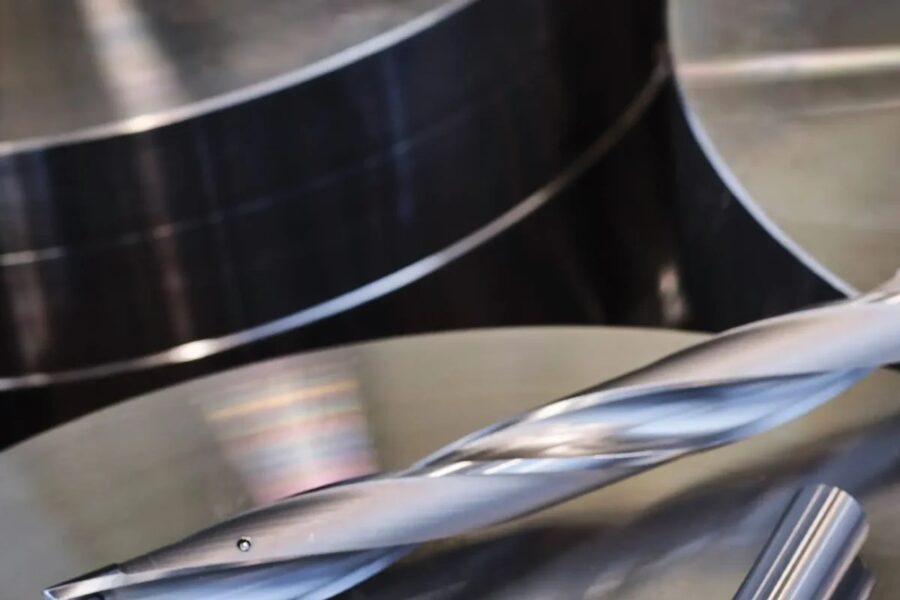
A machine part can have dozens of holes, and if each one takes just a few seconds longer, series production loses hours. Holes also tend to carry a part’s most critical features: bearing bores, bolt holes, hydraulic channels. This article covers the essentials of drilling efficiently and safely with carbide drills.
Which drill type, and when?
Drilling tools fall into three main groups. The choice depends on hole diameter, quantity, machine rigidity and coolant supply.
| Type | Strength | Best for |
|---|---|---|
| HSS / HSS-E drill | Tough, low price | Machines with limited rigidity, one-off parts, manual feed |
| Solid carbide drill | High speed and feed, good hole quality | Series production on CNC machines, Ø3–Ø20 mm |
| Replaceable-tip / indexable drill | The body stays, only the tip or insert changes | Larger diameters, high volumes, lower stock cost |
In CNC series production a carbide drill usually gives the lowest cost per hole despite a higher unit price, because it runs at much higher cutting data, as the calculation below shows.
Point angle and spot drilling
Carbide drills typically have a 135°–140° point angle, while 118° is common on HSS drills. Most modern carbide drills are self-centring and can start directly on a flat surface without a spot.
If you do spot drill, one rule matters: the spot angle must be equal to or larger than the drill’s point angle. A 90° spot for a 140° drill makes the drill touch first with its corners, raising the risk of corner chipping. Use a 142° or 150° spot instead.
Calculating speed and feed
Two values are set for a drill: cutting speed (Vc, m/min) and feed per revolution (f, mm/rev). Spindle speed and table feed follow:
vf = f × n
A concrete comparison for a Ø10 mm hole in C45 steel:
| HSS-E drill | Carbide drill | |
|---|---|---|
| Cutting speed (Vc) | 25 m/min | 100 m/min |
| Spindle speed (n) | ≈ 796 rpm | ≈ 3,183 rpm |
| Feed (f) | 0.18 mm/rev | 0.25 mm/rev |
| Table feed (vf) | ≈ 143 mm/min | ≈ 796 mm/min |
In this example the carbide drill finishes the same hole about five and a half times faster. These are starting values; final data should be verified on site against the manufacturer’s recommendation, material hardness and machine condition. We work through tool price versus cycle time in our cost per part article.
Coolant: external or through-tool?
Coolant has two jobs in drilling: cooling the cutting zone and flushing chips out of the hole. The deeper the hole, the more critical the second job becomes.
- Up to about 3×D: Well-aimed external coolant is enough for most applications.
- 5×D and deeper: A through-coolant drill is strongly recommended. Coolant reaches the tip through channels in the body and pushes chips back out.
- Coolant pressure: Higher pressure improves chip evacuation in deep holes. Consider your machine’s pump pressure when choosing a drill.
Coolant matters even more in poor heat conductors such as stainless steel; see our stainless steel machining guide.
Steps for deep holes
- Drill a pilot hole: Use a short, rigid drill of the same diameter to a depth of 1.5–2×D.
- Enter at low speed: Feed the long drill into the pilot hole slowly while rotating at low speed, then ramp up to full speed. A long drill spinning fast in free air can whip.
- Watch the chips: A change in chip shape or sound may mean evacuation is failing.
- Peck only when needed: Through-coolant carbide drills rarely need pecking; unnecessary pecks just add cycle time.
Hole tolerance and finish
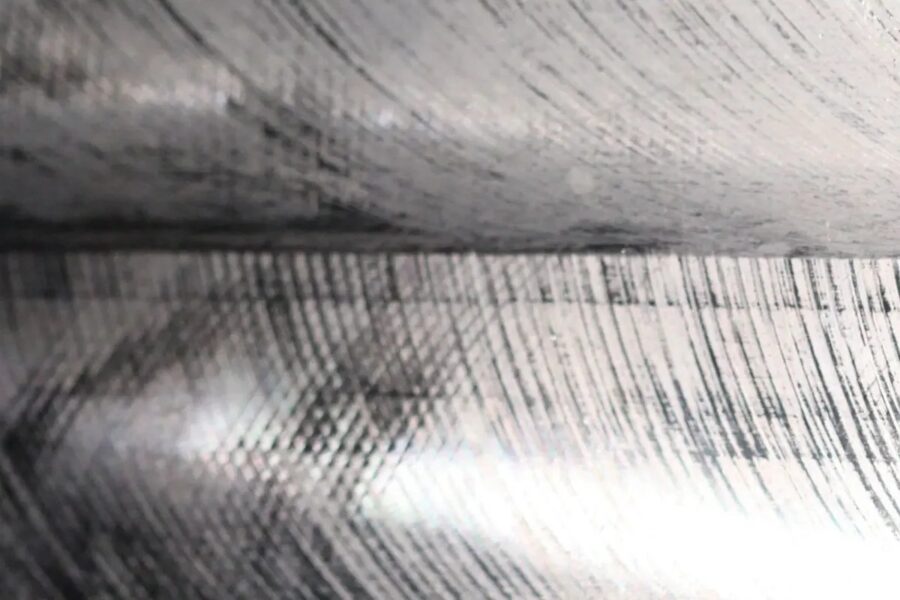
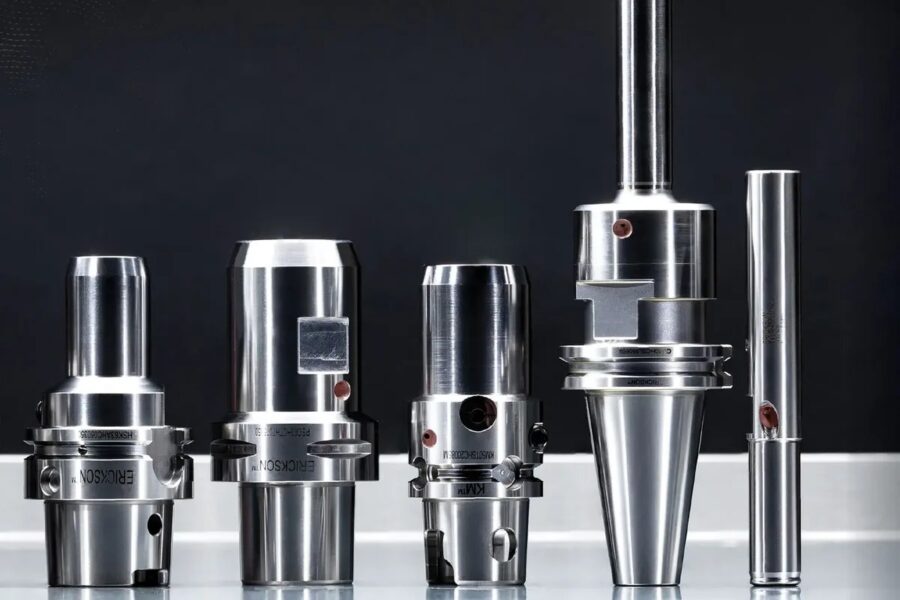
With quality carbide drills, rigid clamping and low runout, holes typically reach IT8–IT9. Tighter tolerances such as H7 and bearing bores need reaming or boring after drilling. Runout is decisive here: hydraulic or shrink-fit holders noticeably improve hole quality.
Common problems
| Symptom | Likely cause | What to do |
|---|---|---|
| Fast corner wear | Speed too high, poor coolant | Reduce Vc, check coolant |
| Edge chipping | Runout, vibration, interrupted entry | Check the holder, spot or face first |
| Oversized hole | Runout, worn or badly reground tip | Measure runout, replace the drill |
| Drill breakage | Chip packing, excessive feed | Through-coolant, lower feed |
Once the hole is right, threading often comes next. We explain how the pre-drill size affects thread quality in tapping problems and solutions.